
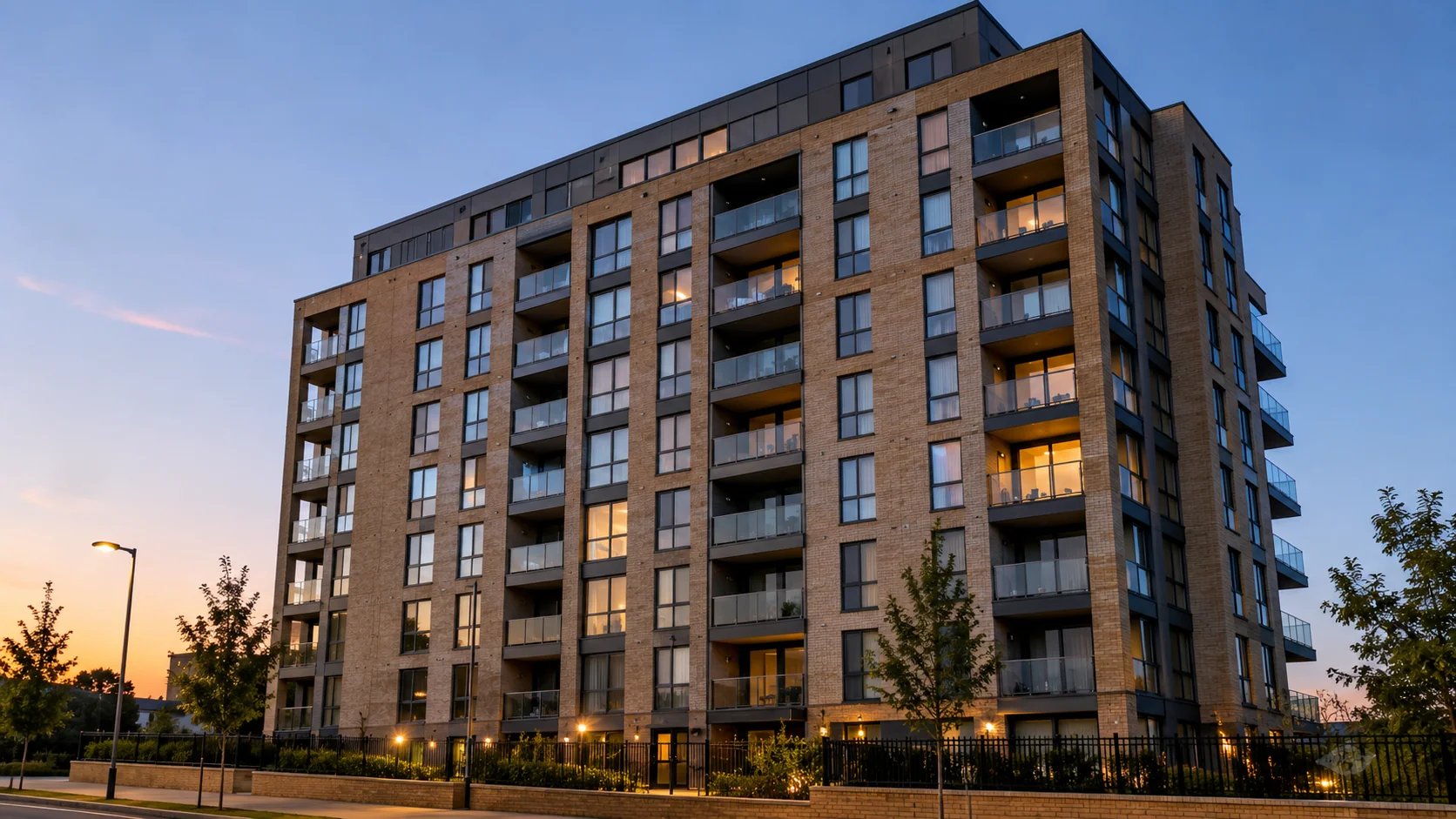
A fire risk assessment is a structured examination of a building or workplace to identify fire hazards, the people at risk, and the precautions needed to keep them safe. Almost all non-domestic premises in England and Wales need one. The duty sits with the “responsible person”, a role defined in the Regulatory Reform (Fire Safety) Order 2005 — the central piece of legislation in this area, usually shortened to the Fire Safety Order or FSO.
Fire safety duties have developed through legislation and updated guidance. This page distinguishes the England-and-Wales Fire Safety Order from additional duties that apply only in England, and separates legal requirements from British Standards used to support assessment.
The legal framework, in order

The Fire Safety Order came into force in October 2006 in England and Wales. For a workplace controlled by an employer, that employer is the responsible person. Other premises have different responsible-person tests, and people with control can have duties limited to that control. The assessment and precautions must protect relevant persons.
The Order generally covers non-domestic premises and relevant parts of multi-occupied residential buildings, with statutory exclusions. A single private dwelling is generally excluded. Fire and rescue authorities usually enforce it, but other enforcing bodies apply to some premises.
Four subsequent pieces of legislation have changed what the FSO requires.
The Fire Safety Act 2021 received Royal Assent in April 2021 and clarified that the FSO covers the external walls, balconies, and flat entrance doors of multi-occupied residential buildings — issues that had been contested before Grenfell. The clarification matters because it brings cladding systems, structural fire protection between flats, and individual flat front doors squarely into the responsible person’s risk assessment.
The Fire Safety (England) Regulations 2022 came into force on 23 January 2023. They introduced specific duties for responsible persons in residential buildings — particularly higher-risk ones — including providing fire safety instructions to residents, checking flat entrance doors, providing wayfinding signage in high-rise buildings, and ensuring fire and rescue services have access to up-to-date floor plans.
Section 156 of the Building Safety Act 2022 came into force on 1 October 2023. It significantly tightened the FSO’s record-keeping requirements: the responsible person must now record their fire risk assessment in full (not just the significant findings), record the identity of anyone they engage to carry out the assessment, share information with any incoming responsible person when premises change hands, and provide residents with relevant fire safety information. These requirements apply universally — not only to higher-risk buildings.
The Fire Safety (Residential Evacuation Plans) (England) Regulations 2025 came into force on 6 April 2026. They apply to specified buildings in England: multi-residential buildings at least 18 metres high or with at least seven storeys, and those over 11 metres with a simultaneous evacuation strategy. They introduce person-centred assessment and evacuation-planning duties for relevant residents.
British Standards support technical practice but are not automatically legislation. BS 9991:2024 addresses residential fire safety design and management, and BS 8674:2025 addresses assessor competence. PAS 79-1 concerns non-housing assessments; BS 9792:2025 now provides the housing assessment code and replaces the withdrawn PAS 79-2:2020.
The responsible person
In an employer-controlled workplace, the employer is the responsible person. For other premises, the Order identifies responsibility through control in connection with a business or undertaking, or ownership where that test does not apply. Other people with relevant control may also have duties. Dutyholders must cooperate and coordinate.
The occupied higher-risk building regime in England generally covers buildings at least 18 metres high or with at least seven storeys and at least two residential units, subject to exclusions. Accountable persons have responsibilities linked to ownership or repair of common parts; the principal accountable person is identified by the statutory criteria. These roles coexist with Fire Safety Order duties.
The responsible person can obtain help with the assessment but remains responsible for ensuring it is suitable and sufficient. Choose assistance appropriate to the building and risks, and check the assessor’s relevant competence.
The five steps applied to fire

The general method follows the same five steps used in any UK workplace risk assessment, translated into fire-specific terms.
Identify the fire hazards
Sources of ignition (heaters, electrical equipment, cooking, smoking, hot work, arson), sources of fuel (combustible materials, stored stock, waste, soft furnishings, fixtures), and sources of oxygen beyond the air in the room (oxygen cylinders, oxidising chemicals, mechanical ventilation that could feed a fire).
Identify the people at risk
Everyone in the building, with particular attention to those who may struggle to evacuate without help: residents with mobility, cognitive or sensory impairments; visitors unfamiliar with the building; lone workers in remote parts of the premises; sleeping occupants in residential premises; large groups gathered in one place.
Evaluate, remove, reduce and protect from risk
Can the hazard be removed entirely — replacing flammable materials with safer alternatives, eliminating sources of ignition, removing unnecessary combustibles? If not, can it be reduced — separation between fuel and ignition, smaller quantities, controlled access? And what protection is in place — detection, alarm, compartmentation, fire-resistant doors, sprinklers, emergency lighting, signage, means of escape?
Record, plan, inform, train
Every responsible person must now record the full assessment and fire safety arrangements under the Order. Provide appropriate emergency procedures, information and staff training. Drills and other exercises should suit the premises and evacuation strategy; a residential stay-put building is not treated like an office evacuation drill.
Review
Whenever there is significant change — to the use of the premises, the layout, the people present, the controls — and at regular intervals to confirm the assessment is still valid. Higher-risk premises warrant more frequent review.
Multi-occupied residential buildings

Multi-occupied residential buildings — blocks of flats, houses in multiple occupation, sheltered housing, care settings with self-contained accommodation — are the area where the framework has changed most since Grenfell.
The FSO covers the common parts: hallways, stairwells, plant rooms, roof spaces, refuse areas. Since the Fire Safety Act 2021 it also expressly covers the external walls (including cladding and balconies) and the front doors of individual flats where those doors open into common parts. The interior of an individual flat remains outside the FSO.
In England, residential buildings with a top storey over 11 metres require communal fire-door checks at least every three months and best endeavours to check flat entrance doors at least every twelve months. High-rise residential buildings — at least 18 metres or seven storeys — have additional duties including plans, external-wall information, secure information boxes and wayfinding signs.
Since 6 April 2026, responsible persons for buildings within the Residential Evacuation Plans Regulations must use reasonable endeavours to identify relevant residents and offer a person-centred assessment. The process is consent-based and informs agreed measures and evacuation information. It also includes building-level evacuation plans and review duties.
Recording the assessment
From 1 October 2023, all responsible persons must record the full assessment and fire safety arrangements. Previously, recording significant findings was required in specified circumstances, including five or more employees, licensing or an alterations notice. The new duty removes those recording thresholds.
A full record should explain the assessment and the fire safety arrangements in place. Its detail should be appropriate to the premises and risk, and it must remain usable and current.
The assessment also has to be shared with any incoming responsible person if the premises change hands, and relevant information has to be provided to residents in domestic blocks.
Who can carry out a fire risk assessment
The responsible person must ensure the assessment is suitable and sufficient. Government guidance says to use competent assistance where needed and to check that the assessor’s knowledge and experience match the premises. Do not assume that a general certificate establishes specialist competence.
A competent responsible person may assess straightforward premises. More complex buildings can require specialist expertise, whether available internally or obtained externally. The decision should follow the hazards and complexity, not an assumption that every residential building legally requires a consultant.
BS 8674:2025 provides a competence framework for fire risk assessors. Professional registers and third-party certification can inform selection, but check their scope and the assessor’s experience of similar premises. NFCC guidance is not itself an NFCC-operated assessor register.
PAS 79-1 provides a method for non-housing premises. BS 9792:2025 provides the current housing assessment code, succeeding the withdrawn PAS 79-2:2020. Its scope excludes, among other premises, care homes and single-household private dwellings, so select guidance suitable for the building.
Appointing an assessor does not transfer the responsible person’s duties. Other parties, including assessors or people with control, may also face liability depending on their actions and the applicable law. Checking competence does not guarantee compliance or immunity.
Enforcement and penalties
The relevant enforcing authority can inspect and take action according to the circumstances. Alterations, enforcement and prohibition notices serve different purposes. A prohibition may restrict use immediately where the risk is sufficiently serious; not every notice means an immediate shutdown.
Serious offences can lead to prosecution, unlimited fines and, for some offences, imprisonment. The outcome depends on the offence and circumstances; no general claim about increasingly severe sentences is needed to explain the duty.
Where the cluster connects
A fire risk assessment is the central document for fire safety in any premises, but it doesn’t sit on its own. The general workplace assessment under the Management of Health and Safety at Work Regulations 1999 covers fire risk to workers; the fire risk assessment under the FSO covers fire risk to everyone in the building. The two overlap and should be consistent.
Where construction work is being carried out, the Construction (Design and Management) Regulations 2015 require fire safety to be addressed in the Construction Phase Plan. Specific activities — hot work in particular — typically need their own RAMS that ties back to the building’s overall fire strategy.
For organisations whose staff need to develop the competence to carry out their own fire risk assessments — or to oversee external assessors with informed judgement — formal Risk Assessment Training is the practical route. The fire-specific element should sit on top of a solid foundation in the general method.
Frequently asked questions
Who is the responsible person for a fire risk assessment?
For an employer-controlled workplace, the employer. Other premises involve statutory tests concerning business control or ownership. Other people with control may also have duties to the extent of that control. Multiple dutyholders must cooperate and coordinate.
How often should a fire risk assessment be reviewed?
Review regularly and whenever there is reason to suspect the assessment is no longer valid or a significant change affects it. There is no universal annual interval for the general fire risk assessment. Specific checks and evacuation-plan duties can have their own prescribed intervals.
Do I need a competent person to carry out a fire risk assessment?
You must ensure the assessment is suitable and sufficient. A competent person may assess straightforward premises internally; seek appropriate specialist help where needed. Check relevant experience and the scope of any certification rather than assuming an external appointment or certificate alone satisfies the duty.
What changed under section 156 of the Building Safety Act 2022?
Section 156 amended the FSO with effect from 1 October 2023. The main changes were a full-recording requirement (replacing the previous “significant findings” minimum), a duty to record the identity of the assessor, a duty to share information when premises change hands, and a duty to provide residents in residential premises with relevant fire safety information.
Is a fire risk assessment required for a single private dwelling?
No. The FSO doesn’t apply inside single private dwellings. It does apply to the common parts of buildings containing two or more dwellings, and to the external walls and flat entrance doors of those buildings, but the inside of an individual house or flat is outside its scope.
What is a person-centred fire risk assessment?
An assessment of a relevant resident’s ability to evacuate and the measures that may help. Since 6 April 2026, the England regulations require this consent-based process in specified high-rise buildings and residential buildings over 11 metres with simultaneous evacuation. It supplements the building-wide assessment and evacuation planning.
Related guides
- How often should a risk assessment be reviewed?
- Who can carry out a risk assessment? The competence question explained
- Risk assessment examples: three worked examples for UK workplaces
Sources & references
- Home Office — Duties under fire safety legislation
- Home Office — Section 156 recording and cooperation duties
- Home Office — Fire-door checks
- Residential Evacuation Plans (England) Regulations 2025
- Home Office — Residential PEEPs guidance
- BSI — BS 9792:2025 housing assessment code
Build the competence to lead clear, defensible risk assessments — including the fire-specific framework.
Explore the Risk Assessment Training course →
Mark writes about workplace health & safety, risk assessment and accredited online training for Risk Assessment Training, part of Online CPD Academy.